BEWARE THE SCAM-2

Tuesday, September 11, 2012

FIRST LINES

Picture an old-fashioned telephone, the kind you'd see in a 1940's movie about a wealthy family. The telephone has a large, square base, and an ornate receiver in the cradle on top.  It rests on the desk in their fancy house. Now imagine a picture of that same telephone on the front of a tee shirt, except that the receiver is now shaped like a whale. Beneath the telephone are the words, "Call me, Ishmael." Amazing what a different receiver and a comma can do.

The last time I saw a tee shirt I wanted to wear was when I found one that said, "Hand over the chocolate and nobody gets hurt." But I digress.

 This post is about first lines of novels, and Google will show you lists of the best 25 or even 100.  Here are a few of my favorites:

1. The aforementioned "Call me Ishmael" without the comma, which is from MOBY DICK by Herman Melville.

2. "Last night I dreamed of Manderly again,"  which is from my favorite book, REBECCA by Daphne du Maurier.

3. As a romance writer, I also like, "It is a truth universally acknowledged that a single man in possession of a good fortune, must be in want of a wife."  PRIDE AND PREJUDICE by Jane Austen.

4.  "He was an old man who fished alone in a skiff in the Gulf Stream, and he had gone 84 days without catching a fish." THE OLD MAN AND THE SEA by Ernest Hemingway.

5. "It was a dark and stormy night."  PEANUTS fans know that Snoopy sat on top of his doghouse, typing that line into his typewriter. I assume you also know the line has been ridiculed as one of the worst, and that every year San Jose State University runs a Bulwer-Lytton contest in which "wretched writers" submit the first sentence of the worst possible book. Many of these are fabulous, but I'm not going to reprint one because it's hard to choose and can be as many as 60 words long.

I actually entered that contest once but didn't win any award. Maybe my sentence wasn't horrible enough, which is, I guess, a mixed blessing. But I still try to write memorable first sentences to my books, and here's a sample of ones I'm happy with.
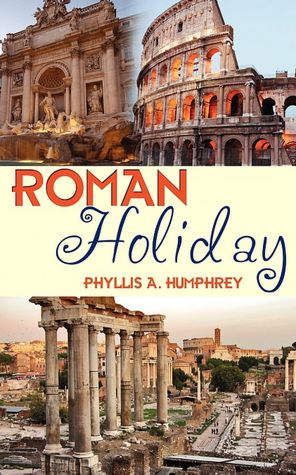
1. "I landed the assignment to go to Rome, not because I was the best reporter at L.A. Life..." ROMAN HOLIDAY,  White Rose Publishing.


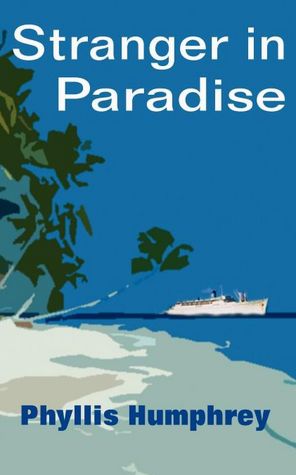
2. "Dana had fallen into a dream job. and. like a dream, it could disappear in an instant." STRANGER IN PARADISE, originally published by Kensington, now an e-book.


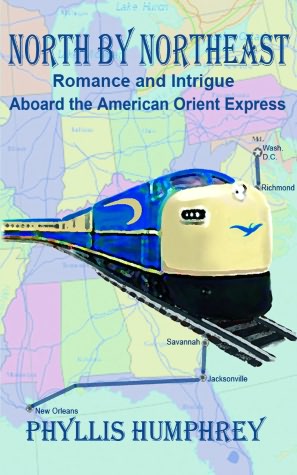
3. "Haley Parsons stared into the beauty salon's oversized mirror. A stranger stared back at her." NORTH BY NORTHEAST winner of the San Diego Book Award in 2002.


4. "I wouldn't ask Gary Pritchard to captain Southern Star if he were the last skipper left alive in the Bahamas."  SOUTHERN  STAR, which was published by Avalon Books in hardcover and available for $5 from me. (For more information, send me an e-mail at this website.)


There are a few more opening lines I'm pleased with, but those books are still in the hands of editors, waiting for acceptance. How about you? Do you enjoy trying to come up with a killer first line? Have you written any first lines in your books that you're especially proud of?

FIRST LINES

Picture an old-fashioned telephone. the kind that sits on a fancy table in a 1940s movie about wealthy people. It has a large square base, and an ornate receiver sits in a cradle on top. Now picture that image on the front of a tee shirt, but the receiver is shaped like a whale.  Below the telephone are the words, "Call me, Ishmael." Amazing what an unusually shaped receiver and a comma. can do.

I haven't seen a tee shirt I wanted to wear since the one that read, "Hand over the chocolate and nobody gets hurt." But I digress.

This post is about opening lines in fiction. Google will show you lists of the best 25 or even 100, from famous novels. Here are a few:

1. The aforementioned "Call me Ishmael" without the comma., from MOBY DICKman Menville.

2. "Last night I dreamed of Manderly again, from my favorite book, REBECCA BY dAPHNE DU mAURIER.

3. As a romlance writer, I also like, "It is a truth universally acknowledged that a single man, in possession of a good fortune, imust be in want of a wife." ride and prejudice by Jane Austen.

4. "It was the best f times, it was the worst opf time..."  

FIRST LINES

Wednesday, September 5, 2012

SKYDIVING

A recent news item about space diving, that is, skydivers going to extreme heights before jumping from an airplane, brought back memories of the two brief years I was married to a skydiver. Neither he nor his buddies jumped from those altitudes, which requires oxygen and special jumpsuits. Instead they concentrated on doing acrobatic stunts while free falling, making mid-air formations or trying to land on a target.

My ex had 600 jumps to his credit and I learned that he got that credit because the pilot of the plane had to sign off. Sort of like: “Yes I took him up in the plane but he jumped out of it.”

I especially remember watching skydivers take part in contests, where they got points for landing closest to the target. Those points turned into prizes at the end of the event. They practiced every weekend, and even weekdays as long as the light held.

The earliest targets were simply white strips of cloth in the form of an “X” but later they used a plastic disc barely four inches across. Some parachutists were so good they not only jumped from over a three thousand feet and landed on the disc, they drove it into the ground.

Some events were actually held at night and the jumpers wore flashlights fastened to their boots. They jumped into a circle of light formed by strategically parked cars with their headlights on. Always trying something new, they also jumped over water into a circle of rowboats. The hero does that in my novel FREE FALL, and is “rescued” by the heroine who thought he was drowning.

The activity called “base jumping,” is when a parachutist doesn’t jump from plane, Obviously, he needs a high place, such as a tall building, bridge or cliff to jump from in order to have time for his ‘chute to open and still enjoy the thrill of a few seconds of free flight. El Capitan in Yosemite National Park in California, attracted hundreds of skydivers, but the park made it illegal.

Base jumping is also more dangerous than skydiving, with a fatality rate twice as high. I didn’t know anyone who died while skydiving, but I heard many stories about some who did. The son of a well-known romance writer--whom I met at a writers conference in Los Angeles years ago--died while hang gliding, not skydiving, in spite of having won many trophies for the sport.

But we love alpha males, who sometimes lead dangerous or reckless lives, don’t we? They are our fictional heroes and make our job of writing romance novels such fun.

Do you, or did you, have such a storybook hero in your life? And did you ever write about him?

Amazon
Barnes & Noble

Synopsis:

Although Jennifer Gray’s job requires her to work with Colin Thomas on a sports promotion, that doesn’t mean she has to like it. He’s a pilot, skydiver, and owner of Skyway Aviation, and she’s afraid of heights! But she must work with Colin for six weeks, and even though she feels a spark of jealousy when Colin seems to have a love interest, she remains convinced he’s not the man for her. Then a friend’s accident during a skydiving exhibition causes a serious rift. Colin knows a good thing when he sees it but—even with humor, sensitivity and plain old-fashioned charm—can he help Jennifer overcome her fear of heights, and convince her their relationship is just what she needs?


Wednesday, August 29, 2012

FONTS FOR THE MEMORY

After some forty years of subscribing to Time Magazine I’m thinking of cancelling. Why? Maybe I’m alone in this, but I hate the fact they’re now printing a lot of their articles in red ink, or worse, light blue. Have they not heard that people are getting older--especially people who are likely to still subscribe to magazines--and their eyesight isn’t what it used to be? Sure, the magazine pages are varied and colorful--sometimes they put a square of orange under an article, but I want to read the content, not admire the d... thing.


I’ve always believed in the saying, “Just because you can do something, doesn’t mean you should.” Cloning people comes to mind, but that’s a different topic.

SCREENS

I love my e-mail but now people are sending me messages in color, especially that light blue. Blue letters against the off-white background are very hard to read, especially if they use a ten-point font. Studies have shown that black on white is the easiest print to read. Except for black on yellow. Why do you think STOP and other street signs are black on yellow?

Have you ever seen Closed Captioning on your TV set? Have you noticed they use white letters on a black background? That’s because the contrast is better. In fact, you may not know it, but you can get white printing on a black background on your computer screen and when you click on it, it says, “high contrast.”

Back in the computer dark ages, 1980 or so, computer screens--like the original Ford cars--came in only one color, black. However, you could get colored printing, white, amber or green. We bought our first PC before IBM even had one and I chose white on black. And still do. All my novels and letters to friends are written that way. And then my computer prints them in black on white. And, don’t send a book to a publisher on colored paper.

ITALICS

Another study has told us that. among fonts, italics is harder to read. Yet, in the past few years, romance novels make increasing use of italics, usually in a character’s thought, also known as “interior monologue.”

I was taught that italics were used only for the following:
1. To emphasize a word. Example, “You talking to me?”
2. For foreign words. Example: Mon Dieu
3. For Titles of books, magazines, films or TV shows
4. To reproduce a letter within a story or novel.

The Chicago Manual of Style Online Edition lists twenty-one uses for italics and none of them are, “for thoughts.”

At one of my very first writers conferences, at least thirty years ago, a best-selling author and teacher (I think it was Dwight Swain) said, substantially, “A long time ago, writers put thoughts in quotation marks. Then they put them in italics. But today, we just write them. If you’re in the character’s viewpoint, whatever you write is obviously his thought.”

So spare your readers and skip the unnecessary italics.

I’d follow the rules here, but Blogger doesn’t print in italics.

Tags:
Fonts
Time Magazine
Chicago Manual of Style
Dwight Swain

Wednesday, August 22, 2012

THROWING MORE ROCKS

One of the many blogs and writing groups I follow mentioned a book with the intriguing title of SAVE THE CAT, which is actually a how-to for screenwriters. The person who recommended it was right--it contains valuable information for novel writers, especially those writing thrillers, mystery or romantic suspense. Because successful movies can teach writers how to build tension.


The short version of the “Rule” is, “Put your protagonist up a tree and then throw rocks at him.” That is, give the hero lots of problems to solve and terrible scrapes to get out of. Stories like that keep the reader turning pages because she wants to know how the hero manages to overcome them all and survive.

Kurt Vonnegut once said, “Be a sadist. No matter how sweet and innocent your leading characters, make awful things happen to them in order that the reader may see what they are made of.”

John Grisham’s first successful book, THE FIRM--his actual first was reissued later--was an example of that kind of story-telling. On one hand the hero is faced with being killed by his law firm boss, and at the same time he’s wanted by the F.B.I. Some readers complained that the actual writing wasn’t good, but the suspense of watching the hero succeed in that situation was compelling.

SAVE THE CAT also reminded me of the advice I got at a writers’ conference many years ago from a best-selling author. He said--and I‘m paraphrasing here--“Movies have been around for a hundred years, television for fifty. Readers and viewers are accustomed to stories that start immediately with action. You can write like Charles Dickens if you want to, and spend four pages on long descriptions, but the audience for that kind of book is DEAD.”

My first chapters are often rewritten dozens of times because I try to follow that advice and hook the reader with something compelling right up front.

Two years ago I sold a romance novel that had been submitted to publishers nineteen times, three of them to the same publisher. What made them finally buy the book? I’m not sure, but just before I sent the manuscript out the last time, I added a scene in which the hero sabotaged the heroine’s attempt to sell the yacht she’d inherited and couldn’t afford to keep. That gave her one more reason to hate him (before they fell in love). In effect, she was up a tree, and I threw another rock at her.

That book, SOUTHERN STAR, originally written with my friend, Carolann Camillo, was only available in hardcover, but--inasmuch as Amazon has bought Avalon Books--will eventually go digital.

Tags:
SAVE THE CAT
THE FIRM
John Grisham
Kurt Vonnegut
Carolann Camillo

Wednesday, August 15, 2012

BRIDGE, RACISM AND WRITING

What do those three things have in common? They came together last week. Author Jenna Bennett reported that her book, A CUTTHROAT BUSINESS, had received an unkind one-star review. The reviewer called it “racist” because the author used the word “darkie.”


However, not only did the book receive many four- and five-star reviews, it’s clear the “shocked” reviewer had not read much of the book and didn’t understand what she did read. The story--a cozy mystery--takes place in the South and a minor character in the book uses the term. What foolishness. Like people who want to take the word “nigger” out of Mark Twain’s HUCKLEBERRY FINN. The author admitted she’d had a hard time selling the book to a publisher, because many editors feared alienating their southern readers. Political Correctness, anyone?

Which is where Bridge comes in. I’m having a hard time selling my own cozy mystery because my amateur sleuth teaches Bridge. I have one chapter--out of 31--where she plays a hand brilliantly and wins a lot of money she didn’t expect. Young editors--and aren’t they all these days, fresh out of college English courses--said “Nobody plays Bridge anymore.” Obviously they don’t know Bill Gates is an avid player, there are tournaments all over the world, books like BRIDGE FOR DUMMIES, Bridge columns in every newspaper, software programs and daily Internet playing.

Just last week I sent off the manuscript to yet another editor and doing so reminded me of my college days. I lived close enough to commute, and when I’d return to the sorority house on Saturday night after a date, I had to sleep in the third-floor “dorm.” It turned out that four girls would show up, steal blankets from unused beds to keep warm, smoke cigarettes and play Bridge. After a few Saturday nights of that, I found a solution. I arrived early and “borrowed” all the lightbulbs. Naturally I hated Bridge then, but later my parents forced me to learn--in order to have a fourth--and now I love it. True Bridge players are often addicts.

In my cover letter, I volunteered to remove the one chapter, but is that “selling out” and should I insist it’s important in my character’s life? Well, maybe. I really, really want to sell that book and start my own mystery series. Like someone said, “Writing is murder.”

P.S. The Olympics are over, but please read my account of the 1984 L.A. Summer Closing Ceremonies under “Beyond Writing” on my website. http://phyllishumphrey.com. I guarantee a “good read.”

Tags:
Jenna Bennett
A CUTTHROAT BUSINESS
Mark Twain
HUCKLEBERRY FINN
Summer Olympics